Television station
Traditional broadcast to digital
A television station moved its whole operation to digital distribution. The broadcast it depends on ran throughout the migration.
Founders with twenty-five years of production delivery, and a way of working that puts the risk on our side of the table. We agree the scope in writing before anyone writes code, deliver working software every two weeks, and send no invoice for a cycle we miss.
For too long the choice has been to pay for hours and carry the risk yourself, or bend the business around software that was never built for it.
We think that is backwards. Software should fit the business, not the other way around.
At BUMM, the people you meet are the people who build. Senior engineers who understand not only how software should work, but what it has to do for the business.
Every two weeks we deliver something that works.
If we miss what we committed to, we absorb the cost.
We do not sell development capacity. We take responsibility for the outcome.
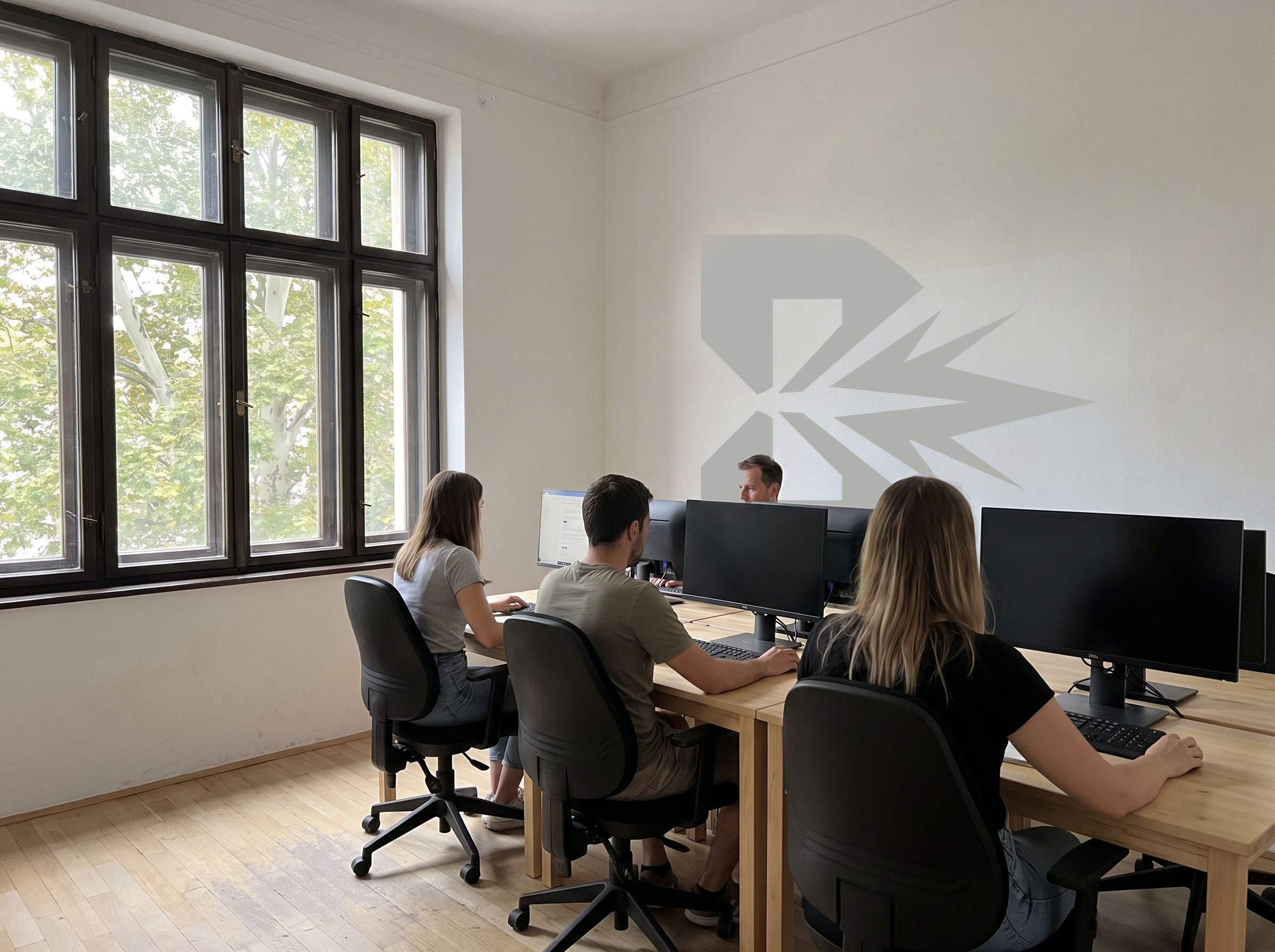
The person who scoped your project runs it and stays on it. Your time goes to two points a cycle: what we plan, and what runs at the end of it.
One named owner, plus a second senior who reviews every change and could take the system over tomorrow. Two people always know it.
A named owner plus a second senior who reviews every change. If one is ill or leaves, the other already knows your system.
Scope, acceptance criteria and decision rights are agreed in writing before code, where you can hold us to them.
Brand and campaign creative belongs to an agency. Round-the-clock operations is a separate engagement, and you hear that on the first call.
Three engagements. In each one the operation had to keep running while it moved.
Television station
Traditional broadcast to digital
A television station moved its whole operation to digital distribution. The broadcast it depends on ran throughout the migration.
E-commerce platform
EUR 20,000 a month to nothing
A live e-commerce operation was paying around twenty thousand euros a month to licence its platform. It now runs on software the client owns outright, and the shop stayed open through the switch.
High-traffic sites
Millions of visits a month
Sites our founders built and still run serve millions of visits a month. The capacity was designed in at the start.
Founder-led work. Client names stay off this page until they release them. Referees from these engagements are available before you sign, and before you spend an hour on a call.
The questions buyers usually have to extract on a call, answered here.
We take it over end to end, we build what you decide, or our engineers work inside your team. Each is bought as a fixed Statement of Work or as two-week cycles, and the price is in writing before you commit.
You hand us the outcome. We own the product decisions, the delivery and the release, and your time goes to the cycle boundary.
Read moreYou keep the product or project management. We are the senior engineering team that turns your decisions into working software.
Read moreOur engineers work inside your existing team: your board, your reviews, your standards. Senior capacity without a hiring cycle.
Read moreThe same sequence for a two-person startup and a procurement department. Only the paperwork changes.
01
A call with the engineers who would do the work. If we are the wrong team, you hear it on that call.
02
Deliverables, acceptance criteria, milestones and who decides. Anything inside the criteria is ours; anything outside is a change, priced in writing before it starts.
03
Two-week cycles, each ending in working software. A date at risk reaches you within one business day of us knowing it.
04
Code, infrastructure and documentation have been yours since day one. Leaving takes a notice period.


Where AI sits between your requirement and your working system, and where a person still has to sign.
The tools and model providers that come near your code are named in writing before work starts, with the region they run in. A mode with no external model access is available on request to any client, whatever their sector.

01
A person writes the acceptance criteria before anything is built. Tests are checked against those criteria, never derived from the code that has to pass them.
02
The repetitive work, the part that looks the same on every project, is done by AI agents under a senior engineer's direction.
03
Every check is blocking. A failure stops the change, and clearing it takes a second engineer.
04
A named engineer reads every line and signs it off. Every generated line is read by a person before it reaches your system.
05
The same checks every time, and the written specification is updated in the same change as the software.
Due diligence runs inside every two-week cycle. A problem found then costs a day; the same problem found a week before launch costs the date.
Who can sign in, what they may reach, and how data is handled are decided when the system is designed.
Dependency and licence checks run on every change, and a finding blocks it like any other failure.
Each cycle re-examines the entire system, including the parts nobody touched. Findings are fixed in that cycle.
It is fixed as a defect, not filed in a backlog behind features.
We hold no ISO 27001, no SOC 2 and no third-party penetration-test report. If your procurement requires one, say so on the first call and you will get a straight answer about whether we can meet it.
Speed, and a partner who owns delivery.
Documented scope and named accountability.
Most engagements do both: sprints to find out what the system needs, then a Statement of Work once scope holds still.
The four people who run BUMM have spent twenty-five years building and shipping production software, and they led all three engagements above. The person who scopes your work is one of them, and so is the person you escalate to.
You can buy capacity by the day. Judgement arrives with the people who have already made the mistakes.
We work across three cities in two countries, inside one time zone and one legal market.
The farthest two are 350 km apart, so being in the room with you is a morning rather than a project. The contracting entity is the same wherever you are, and the law that governs your engagement is named in the Statement of Work before signature.
Vienna
Austria
Ljubljana
Slovenia
Trieste
Italy
One call with the engineers who would do the work. We sign your NDA before you describe anything confidential, and if we are the wrong team you hear it in the first fifteen minutes.